Are Pokemon cards a good investment?
updated Oct 16, 2026
Mostly no, and the data on this site is unusually blunt about it. Across every card we hold a price history for, the median one moved +6.4% over the last year and +29.9% over three. Only 54.5% rose over a year. If you bought a card at random you probably lost money, and that is before the fees.
The single most useful split is price
Group every card by what it cost three years ago and the hobby splits cleanly in two. Cheap cards did not drift up with everything else. They went nowhere, and they are most of the cards in existence by count.
One caveat on that bottom row, because it matters: a card cannot fall much below a dollar, so the +4.2% on the under $5 band understates how flat bulk really is. The direction is right and the magnitude is soft. The other bands do not have that problem.
Then when it was printed
The era split is starker than the price split, and the line falls somewhere around 2017, which is roughly when print runs stopped being a constraint on supply.
What that looks like as cards
Six that rose and six that fell over the same three years, all of them trading at least twice a month, so none is a thin quote. The pattern in the tables is not an abstraction: it is these.
 WooperThe Town on No Map+4639.8%$55.93£42.22€49.90
 Giratina EXThe Best of XY+3349.2%$63.81£48.17€56.93
 QuagsireThe Town on No Map+3330.0%$41.16£31.07€36.72
 Weakness GuardAquapolis+2514.7%$285£215.15€254.28
 VulpixBase Expansion Pack+2452.0%$25.52£19.27€22.77
 Psyduck (33)Boundaries Crossed+2386.8%$47£35.48€41.93
 MiriamViolet ex
 ShaunaBlue Sky Stream
 Steven -PXY Promos
 LanaGX Battle Boost
 SerenaIncandescent Arcana
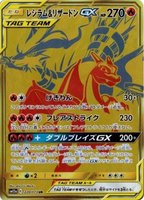 Reshiram & Charizard GXTAG TEAM GX: Tag All Stars
Which sets, specifically
Ranking every set on its median card gives the cleanest pattern in the whole dataset. The top is small subsets that were hard to pull and short print runs from the early 2000s. The bottom is the flagship base sets that everybody opened.
 Pokemon VSAug 19, 2001$29.99£22.64€26.76+306.8%
 Legendary Treasures: Radiant CollectionNov 6, 2013$7.99£6.03€7.13+300.0%
 McDonald's Pokémon-e Minimum PackJan 26, 2002$58.80£44.39€52.46+286.4%
 EX Unseen ForcesAug 22, 2005$30.64£23.13€27.34+276.6%
 EX FireRed & LeafGreenAug 30, 2004$26.20£19.78€23.38+267.0%Trick or Trade BOOster BundleSep 1, 2022$0.20£0.15€0.18-86.4%World Championship DecksJul 1, 2018$0.99£0.75€0.88-84.1%
 Battle Academy 2022Apr 1, 2022$0.27£0.20€0.24-81.7%SM Trainer Kit: Alolan Sandslash & Alolan NinetalesApr 6, 2018$0.25£0.19€0.22-78.2%Battle Academy 2024Jun 21, 2024$0.18£0.14€0.16-76.4%
The part nobody prices in
Every figure above is gross. Selling on eBay costs 13.35% plus $0.40, TCGplayer 10.25% plus $0.30, and grading is $79.99 a card before postage. A card that rose 20% over three years is a loss after fees, and a good chunk of the hobby sits in exactly that band. The investment calculator takes the fees off, which is the only version of these numbers worth acting on.
The other thing to check before buying anything is whether it trades at all. A card can show a 200% gain on three recorded sales a year, and that is a quote rather than a market. The trends list filters on cards that sell at least monthly by default, and turning the filter off is an education in itself.
So what would you actually buy
If the goal is cards that hold value rather than cards that are cheap, the data points one way: something already established, in a set that was hard to complete, with real trading volume behind it. The winning sets above have median cards in the $29.99£22.64€26.76 to $26.20£19.78€23.38 range, so this is not a game that needs thousands of dollars to play. What it does need is not buying the newest set on release, which is the one thing the last five years say plainly.
None of this is advice and none of it is a forecast. It is what happened, measured on sold prices rather than asking prices, and the honest reading includes the part where most cards went down.